
PARennial Insights: Understanding Swing Direction
Swing direction helps explain the broader direction your swing is working through impact. Learn how to read it, how it differs from club path, and how to use it in practice.
Swing direction is one of those numbers that sounds technical until you see how much it explains. If your stock shot keeps starting one way, or if your curve changes from day to day, swing direction can help you understand the pattern instead of guessing your way through it.
What Is Swing Direction?
Swing direction describes the overall direction the club is moving through the impact area relative to your target line. It is not exactly the same as club path, but it gives you a strong clue about the broader direction your swing is working.
- Out-to-In (-)
- Club moves left of target line (for right-handed golfers)
- Common among recreational players
- Often creates that familiar slice spin
- Can lead to pulls with a closed face
- In-to-Out (+)
- Club moves right of target line
- Preferred by many tour professionals
- Perfect for drawing the ball
- Can cause pushes with an open face
- Neutral (0)
- Club moves directly down the target line
- Ideal for consistent straight shots
- Provides maximum versatility
- The foundation of reliable ball striking
How Swing Direction Shapes Your Shot
A lot of golfers never look at swing direction, which is part of why certain misses feel random. Once you start paying attention to it, you can usually see why one day feels like pulls and another day feels like blocks or wipey fades.
Out-to-In Path
- Creates left-to-right spin (slice)
- Excellent for intentional fades
- Can reduce distance due to glancing impact
- Often leads to inconsistent contact
In-to-Out Path
- Promotes right-to-left spin (draw)
- Maximizes distance potential
- Creates better compression
- Helps shallow out steep swings
Neutral Path
- Enables all shot shapes
- Produces consistent contact
- Maximizes efficiency
- Improves distance control
Practical Tips for Improving Swing Direction
- Perfect Your Setup
- Align your body parallel to target
- Position ball appropriately
- Maintain proper posture
- Master the Transition
- Drop into the slot
- Feel the shallow motion
- Maintain spine angle
- Practice with Purpose
- Use alignment aids
- Focus on path drills
- Monitor your progress
How to Use Swing Direction During Practice
The best use of swing direction is not staring at one swing and trying to make it perfect. It is using a small set of shots to figure out whether your motion is consistently working left, right, or neutral through impact.
- Hit 8 to 10 shots with the same club and look for the pattern. One swing can lie to you. A group of swings usually does not.
- Pair swing direction with what the ball is actually doing. If your swing direction is left and the face is also left, pulls start to make a lot more sense.
- Use it to confirm feel. A lot of golfers think they are swinging more from the inside when the numbers say otherwise.
- Do not try to fix everything with swing direction alone. It works best when you read it next to club path and face angle.
Common Golfer Patterns
- If swing direction keeps working left, pulls and fades usually show up more often.
- If swing direction keeps working right, pushes and draws usually become more available.
- If swing direction is close to neutral but the ball is still starting offline, face angle is usually the first place to look.
- If your swing direction changes a lot from shot to shot, setup and transition are often part of the problem.
To put this number in context, read Club Path, Face Angle, and Swing Direction vs Club Path. Those posts make it easier to see where swing direction fits in the larger ball-flight picture.
Take Control of Your Game
If you want tighter start lines and more predictable shot shape, swing direction is worth learning. It gives you another layer of context beyond face angle and club path, especially when your miss pattern keeps repeating.
Book a session today and start learning what your swing direction is telling you.
Keep Exploring
More by PARennial Golf

Tiilila Takes the North Shore Shootout with a Clutch Eagle Finish
Tatu Tiilila eagled the final hole to win the North Shore Shootout at two under net, edging Mitch Baker by a single stroke in the first finalized tournament of the 2026 PARennial Cup season.

Unrestricted vs Flex Bookings at PARennial Golf: What's the Difference?
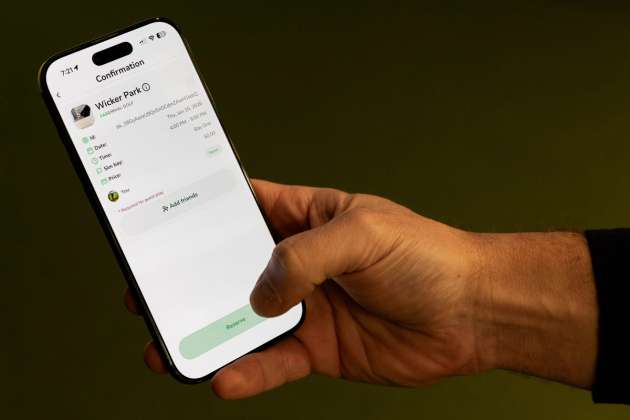
Flex and unrestricted both work for advance bookings, but unrestricted is more versatile because it also works for same-day bookings.

The 2026 PARennial Cup Is Here
The 2026 PARennial Cup opened on March 1, 2026 with a 23-event regular season, 26 registered players, and the top 16 advancing to playoffs on November 1.