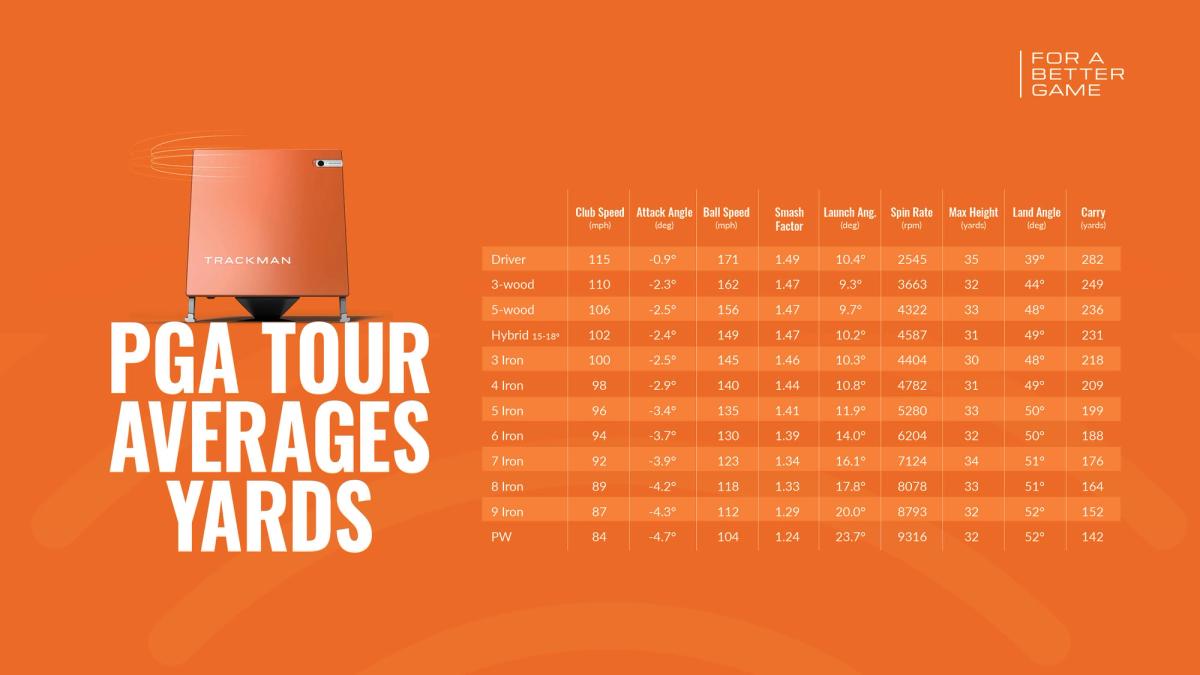
Understanding Trackman Data: Your Complete Guide to Swing Data Analytics
Launch monitor data can feel overwhelming at first. This guide explains the swing and ball-flight numbers that matter most, how they work together, and how to use them during practice.
Ever looked at a launch monitor screen and felt overwhelmed by the numbers? You're not alone. At PARennial Golf, we believe understanding your data is just as important as collecting it. This guide breaks the key swing and ball-flight measurements into practical terms so you can make better decisions during practice.
The Fundamentals: Club Data
Speed & Direction
- Club Speed: Think of this as your swing's horsepower - it's how fast your club head is moving right before it kisses the ball. This is your power generator.
- Club Path: Are you swinging in-to-out or out-to-in? This measurement tells the story of your club's journey through impact. It's like your club's GPS track through the hitting zone.
- Swing Direction: This shows how your swing plane relates to your target line - think of it as your swing's compass reading.
- Attack Angle: This tells you whether the clubhead is moving up or down at impact. It has a major influence on launch, spin, and how efficiently you deliver the club for different shots.
Face & Impact Details
- Dynamic Loft: The real MVP of launch conditions. This isn't just your club's stated loft - it's the actual loft your club face is presenting at impact. Sometimes what you feel isn't what's real!
- Face Angle: Where is your club face pointing at impact? This is crucial because it accounts for about 85% of your initial ball direction.
- Face to Path: The relationship between your face angle and club path. This is the secret sauce that determines your shot shape.
Ball Flight Characteristics
Launch Conditions
- Ball Speed: The immediate aftermath of impact - how fast is your ball traveling? This is a key indicator of your energy transfer efficiency.
- Smash Factor: Think of this as your impact efficiency rating. It's a simple ratio between ball speed and club speed, but it tells a complex story about your impact quality.
- Launch Angle: The vertical start angle of your ball flight. Combined with spin, this determines your shot's height and distance potential.
Spin Characteristics
- Spin Rate: How many RPMs (revolutions per minute) your ball has. This is crucial for both distance and control.
- Spin Axis: The tilting of your ball's rotation axis determines if your shot curves left or right. Think of it as your ball's lean angle through the air.
Advanced Measurements
Distance Metrics
- Carry Distance: The pure flying distance before your ball touches down
- Total Distance: The full journey - carry plus roll
- Height: Maximum height of your shot - crucial for playing in different conditions
Impact Location
- Impact Height: The vertical location on the club face you struck the ball
- Impact Offset: The horizontal location on the club face you struck the ball
Why This Matters
These numbers tell the story of your golf swing, but like any good story, it needs interpretation. Understanding these parameters helps you:
- Make more informed decisions about your technique
- Focus your practice on what matters most
- Communicate more effectively with your coach
- Track your progress with objective measurements
Read These Numbers First
If you only look at a handful of numbers after each shot, start here. These measurements explain most start-line, curvature, and strike-quality questions before you get lost in secondary data.
- Club Path: This tells you the direction your club is moving through impact (in-to-out or out-to-in). Think of it as your club's highway through the hitting zone.
- Face Angle: The direction your club face is pointing at impact. This is crucial because it's the primary factor in determining where your ball starts its journey.
- Face to Path: The relationship between these two measurements. This is your shot shape calculator - it tells you exactly why your ball curves the way it does:
- Face open to path = ball curves right
- Face closed to path = ball curves left
- Face matching path = straight ball flight
- Attack Angle: Use this to understand whether you are delivering the club up or down at impact. With a driver, it helps explain launch and spin. With irons, it helps explain strike and trajectory.
Once these numbers make sense together, the rest of your launch monitor data becomes much easier to interpret. After that, use launch angle, spin rate, carry, and strike location to fine-tune the flight you want.
How to Use This Data During Practice
The fastest way to improve with launch monitor data is to use it as a diagnostic loop, not a scoreboard. Start with the ball flight you see, confirm it with the numbers, then make one small adjustment and measure the result.
- Start with start line and curve. If the ball starts right or left, look at face angle first. If it curves, check face to path next.
- Use small sample sizes. Look at averages over 8 to 10 shots with the same club instead of reacting to one swing.
- Change one variable at a time. If you change grip, ball position, and alignment all at once, the numbers will not tell a clear story.
- Match the metric to the club. With driver, prioritize attack angle, launch angle, and spin. With irons, prioritize carry distance, start line, and strike quality.
Simple Ball-Flight Cheat Sheet
- Starts right and curves right: The face is likely open to the target and open to the path.
- Starts left and curves left: The face is likely closed to the target and closed to the path.
- Starts right and curves back left: The face is right of target but closed relative to the path.
- Starts left and curves back right: The face is left of target but open relative to the path.
If you want to go deeper on the key delivery numbers, start with Face Angle, Face to Path, Club Path, and Swing Direction. Together, those posts give you the clearest picture of why the ball flew the way it did.
Keep Exploring
More by PARennial Golf

Tiilila Takes the North Shore Shootout with a Clutch Eagle Finish
Tatu Tiilila eagled the final hole to win the North Shore Shootout at two under net, edging Mitch Baker by a single stroke in the first finalized tournament of the 2026 PARennial Cup season.

Unrestricted vs Flex Bookings at PARennial Golf: What's the Difference?
Flex and unrestricted both work for advance bookings, but unrestricted is more versatile because it also works for same-day bookings.

The 2026 PARennial Cup Is Here
The 2026 PARennial Cup opened on March 1, 2026 with a 23-event regular season, 26 registered players, and the top 16 advancing to playoffs on November 1.